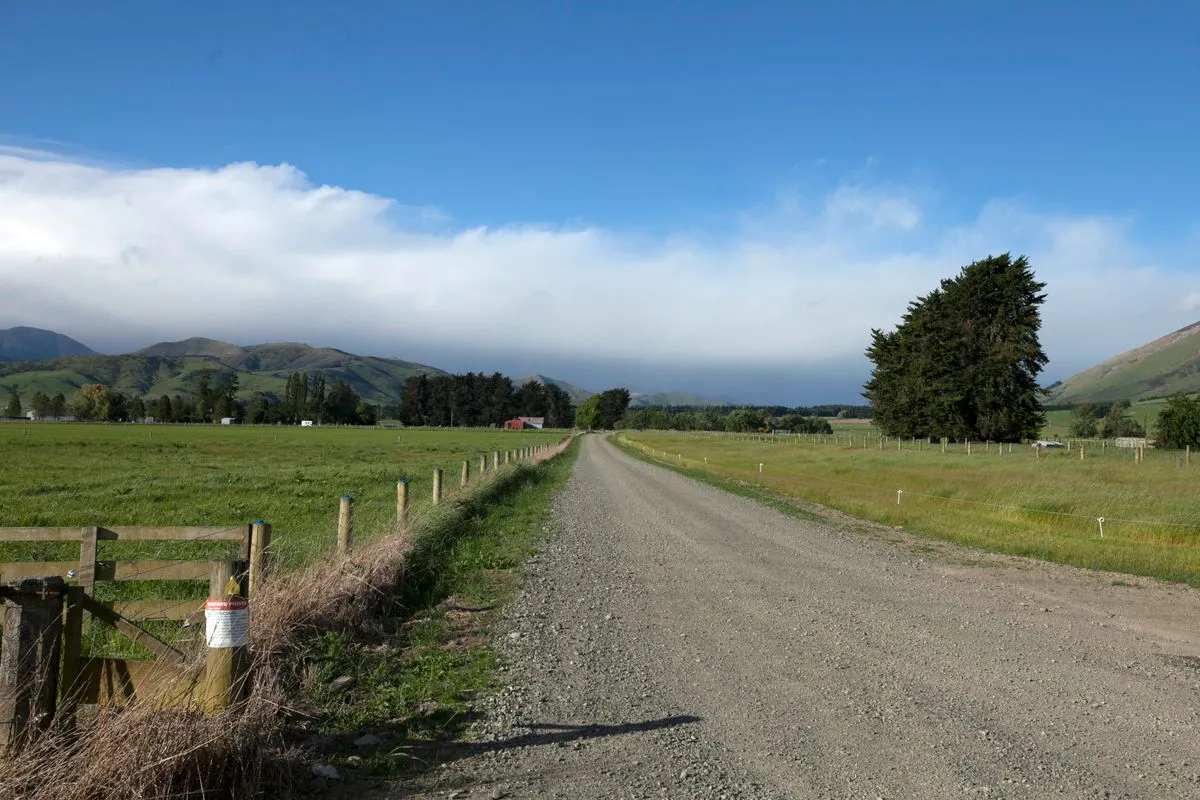
A drive that sits above the ground around it sheds water and blows clear of snow. We set the route with the wind in mind and add culverts where it crosses a ditch or draw.
Gravel drives and ranch roads are the norm around Cheyenne, and the ones that last are built higher than the ground beside them. We strip the topsoil, shape a crowned base and build up compacted road base in layers. A drive that sits above the surrounding ground sheds water and blows clear of snow, while one that sits low becomes a drift trap and a mud hole in spring.
Snow and wind decide a lot about driveway layout here. Drives running across the wind fill with drifts behind fences, buildings and shelterbelts, so we look at where snow piles up before setting the route. Ditches on both sides carry snowmelt away, and culverts where the drive crosses a ditch or a draw keep water from washing out the road base.
For paved drives in town, we dig out the old surface, remove soft soil and build a compacted base to the depth the paving contractor needs. Where a drive meets a city street, a county road or a state highway, the road owner may require an access permit and set the culvert size. We check those rules before the first truck arrives.
Driveways & roads in Cheyenne: common questions
What base do you use for gravel drives?
Crushed road base with fines packs into a firm surface. A coarser top gravel can be added if you like.
How do I keep my drive from drifting shut?
Raising the drive above the surrounding ground and keeping it away from snow-trapping fences and trees helps the most.
Do you install culverts?
Yes. We put in culverts where drives cross ditches or draws, sized to the road owner's rules.
How it works
- Free estimate: Call, text or book online. We walk the site with you.
- Written quote: Scope, equipment and price in writing.
- Utility locate & plan: We have utilities marked and plan access, haul-off and erosion control.
- Dig, grade & clean up: We complete the work, grade the site and haul away spoil.